Most B2B marketing teams noticed the numbers drop. Fewer impressions on company posts. Lower engagement rates despite more content. The organic reach that used to come reliably from a well-maintained LinkedIn page started to quietly disappear.
The change did not announce itself with a press release. It happened gradually through 2025 and became definitive in late 2025 when LinkedIn launched a new unified ranking engine called 360Brew. If your team has not adapted to it yet, this piece is for you.
The short version: LinkedIn rebuilt its algorithm from the ground up. The new system rewards authentic, expertise-driven content from real people. Company page broadcasting — which most B2B brands spent years building — does not get the same distribution anymore. Employee voices do.
What Is 360Brew and What Did It Change?
360Brew is a 150-billion-parameter AI model that replaced LinkedIn's fragmented, signal-based ranking system with a single unified engine. The old system counted likes and reactions as proxies for quality. 360Brew actually reads content semantically. It looks for expertise, professional context, and whether a post generates the kind of engagement that signals genuine value to the network.
This distinction matters more than it might seem. The old system could be gamed by driving early engagement on a post, using popular hashtags, or posting at peak hours. The new system is harder to manipulate because it is evaluating the content itself, not just the signals around it.
LinkedIn made a deliberate choice about what kind of content it wants to distribute: authentic, expert-driven, personal. Corporate broadcast content did not make that list.
What the Algorithm Rewards in 2026
360Brew is looking for specific signals that the old algorithm largely ignored:
Professional depth. Posts that demonstrate real knowledge in a specific domain get categorized as authoritative. Over time, consistent contributors on a topic get labeled by the algorithm as subject matter experts. That label changes how their content gets distributed.
Conversation quality. The algorithm distinguishes between engagement that signals value — substantive comments, saves, shares with added context — and manufactured engagement. Reactions and generic replies count for less. Replies that extend the conversation count for more.
Personal versus brand context. Content published from personal profiles by real people with professional history, connections, and consistent posting patterns gets different treatment than content from brand pages. Not worse necessarily, but routed differently. Personal content reaches first-degree connections more reliably. Brand content is increasingly dependent on paid distribution.
What Happened to Company Page Reach
Organic reach for brand pages has declined materially. The exact numbers vary by industry, audience quality, and content type, but the direction is consistent across almost every B2B brand we talk to: posts that used to reach thousands reach hundreds. Engagement rates that used to be reliable baselines are now ceiling numbers.
This is not a temporary algorithm fluctuation. It reflects a deliberate platform decision about what LinkedIn is for and what it wants to become. LinkedIn has been building toward this for years. 360Brew made it definitive.
The practical implication: the investment many brands have made in growing their LinkedIn following is worth less than it was two years ago. A page with 50,000 followers that averages 1-2% organic reach is reaching 500-1,000 people per post. Meanwhile, a single engaged employee with 1,000 connections who posts consistently can reach the same number — with more trust and better targeting, because their network is personally relevant to them.
The New Distribution Layer: Why Employee Voices Now Lead
The brands picking up the reach that brand pages lost are not spending more on paid. They are activating the people already on their payroll.
When employees post on LinkedIn, a few things happen that brand pages cannot replicate. First, the content enters their personal network — people who know and trust them, which is inherently higher-trust than a brand follow. Second, the algorithm categorizes the content by the person posting it, not just the topic, which means consistent employee voices build authority that compounds over time. Third, engagement on personal posts tends to be qualitatively different — more conversation, more replies, more saves — which the new algorithm rewards.
This is not a theory. The data is already visible in brands that have activated employee advocacy programs. The reach, engagement, and brand recognition outcomes from employee activity consistently outperform equivalent spend on organic brand content and, in many cases, on paid social.
The gap most brands haven't closed: Only 3% of employees currently share content about their employer on LinkedIn. Those 3% generate 30% of total brand engagement. Most organizations have not yet built the mechanism to activate the other 97%.
There Is One More Layer: AI Search
The LinkedIn algorithm shift is urgent on its own. But there is a second reason this matters that compounds the urgency.
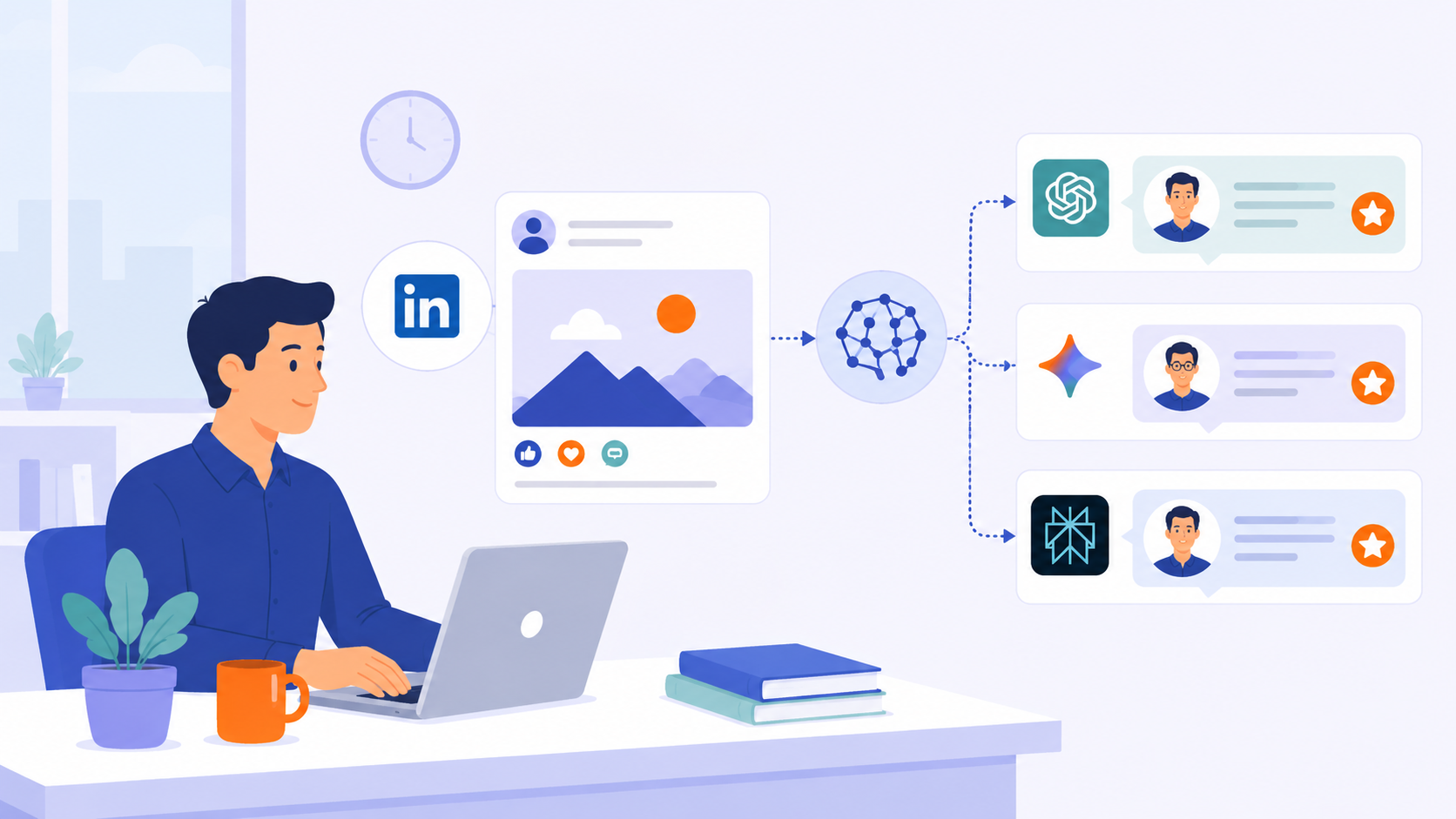
LinkedIn is now the 2nd most-cited domain across ChatGPT Search, Google AI Mode, and Perplexity. When B2B buyers use AI tools to understand a category, evaluate vendors, or research a problem, the answers those tools generate are increasingly built from LinkedIn content — specifically, from personal posts by people with real expertise.
Buyer shortlists are being built before anyone visits a vendor website. Employee content on LinkedIn shapes that process. A brand whose employees are consistently publishing expertise on LinkedIn is gradually becoming the default answer to category questions across AI search. A brand with no employee voice is invisible to that layer entirely.
Silence on LinkedIn is no longer neutral. It is invisible.
What to Do About It
The response to the algorithm shift is not to abandon your company page or to ask employees to post more. Both approaches fail for predictable reasons. The company page still has a role — it anchors your brand presence and provides a destination for paid traffic. And simply asking employees to post generates sporadic, brand-inconsistent activity that neither builds authority nor sustains itself.
What works is building a structured employee advocacy program: a system that makes participation easy, removes the blank-page problem, routes the right content to the right employees, and tracks what is actually working. That is different from ad-hoc sharing, and the outcomes are meaningfully different too.
The brands that treat employee voice as a primary distribution channel — rather than a supplementary one — are building an advantage that compounds. Authority on LinkedIn does not disappear when you pause your content calendar. It accumulates. The brands building it now are making an investment that becomes harder for competitors to replicate the longer they wait.