Replacing Manual Employee Advocacy in 2026
How much of your week goes toward chasing employees to share a LinkedIn post? If the answer makes you wince, you're not alone. HR leaders, talent acquisition managers, and B2B marketers across mid-market and enterprise organizations are spending hours on manual workflows that were never designed to scale.
The spreadsheets, the Slack reminders, the copy-paste requests: they worked when your team had 20 people. Now your organization has grown, and the manual approach is quietly draining time, budget, and morale. This guide walks you through every barrier that manual employee advocacy creates and shows you a measurable path to replacing it.
You'll learn how to diagnose the real cost of manual workflows, build a business case for change, and roll out a platform-based program that HR, talent acquisition, and marketing can all rally behind.
Key Takeaways: Replacing Manual Employee Advocacy
- Manual employee advocacy drains HR and marketing resources through repetitive, untrackable tasks that cannot scale beyond small teams.
- The true cost of manual programs includes lost employee participation, inconsistent messaging, and zero attribution to pipeline or revenue.
- Platform-based advocacy replaces guesswork with structured workflows, AI-generated content variations, and measurable business outcomes.
- GaggleAMP helps organizations achieve 75% average employee adoption by embedding sharing directly inside Slack and Microsoft Teams.
- A phased rollout starting with a 30-day pilot gives HR, talent acquisition, and marketing a low-risk path to measurable results.
What Is Manual Employee Advocacy?
Manual employee advocacy is any program where a person, usually a marketing coordinator or HR lead, individually asks employees to share company content on their personal social media accounts. The requests travel through email threads, Slack messages, or shared documents. There is no centralized system to track who shared what, when, or whether the content reached anyone at all.
In practice, it looks like a marketing manager drafting a LinkedIn post, copying it into a Google Doc, and sending the link to a Slack channel. Some teams add a spreadsheet to track participation, but that spreadsheet quickly becomes one more task nobody has time to maintain.
The approach works when a company has a handful of enthusiastic early adopters. It breaks down as soon as you try to involve more than a dozen people, because every additional participant adds coordination overhead without any corresponding increase in visibility or measurement.
Why Do Manual Advocacy Workflows Fail at Scale?
Manual programs rely on human willpower at every step. Someone has to create the content, distribute it, follow up, and then attempt to measure the results. Each of those steps introduces friction that compounds with every new employee you bring into the program.
According to The Human Edge Report (2026), only 6 to 7% of employees at the average B2B company post on LinkedIn in a given month. Manual workflows contribute to that low baseline because the process demands too much effort for each individual share.
Employees are not ignoring your requests because they don't care about the brand. They hesitate because the blank page feels risky, writing from scratch takes time they don't have, and there is no easy mechanism to share content in a way that sounds like them rather than a corporate announcement.
The Coordination Tax on HR and Marketing
Every manual advocacy cycle consumes hours of coordinator time. First, you write or curate the content. Then you personalize the request for different teams, because a sales-focused post and a culture post require different framing. After that, you send the request, wait, send a reminder, wait again, and manually tally whatever responses come back.
That time adds up quickly. For organizations with 200 or more employees, the coordination tax can consume an entire role's worth of hours each week. And unlike paid advertising, where spend correlates to reach, manual advocacy offers no guarantee that effort produces any measurable discovery.
The Measurement Gap
Without a centralized platform, you have no reliable way to connect an employee's share to website traffic, a lead, or a pipeline opportunity. Most manual programs report on the number of shares (if they track shares at all) rather than on business outcomes like clicks, engagement, or revenue influenced.
This creates a credibility problem. When the CFO asks what employee advocacy is contributing to pipeline, a spreadsheet full of share counts does not survive the follow-up question. Programs that can't prove ROI get cut first when budgets tighten.
Ready to Learn More?
If you’re ready to learn more about how GaggleAMP can help your business, we’re ready to show you!
Who Suffers Most From Manual Advocacy Programs?
HR and Talent Acquisition Teams
HR teams use employee advocacy to strengthen employer branding and attract passive candidates. When the program is manual, HR professionals spend disproportionate time requesting and tracking shares of culture posts, job openings, and company news. The irony is hard to miss: the team responsible for employee engagement is creating busywork that disengages the very people it needs.
Talent acquisition leaders lose a different kind of value. Passive candidates form impressions of your employer brand based on what your current employees share. If your employees aren't sharing, or if they're sharing the same corporate copy-paste that everyone else on the feed uses, you're invisible to the exact people you're trying to reach.
B2B Marketing Teams
Marketing teams feel the pain in reach and attribution. LinkedIn's algorithm increasingly rewards personal voices over company pages. Your employees' combined networks can be 10 times larger than your company page following. A manual program wastes that advantage because participation is inconsistent and unmeasurable.
Without attribution, marketing cannot connect advocacy efforts to pipeline metrics. That makes it difficult to justify continued investment in the program, even when everyone agrees that employee content earns more trust than paid brand ads.
Sales Enablement and Social Selling Teams
Sales professionals benefit from advocacy when they can share timely, relevant content that positions them as knowledgeable in their field. A manual program fails sales teams in two ways: the content arrives late (or not at all), and there is no mechanism to align the content with specific accounts, verticals, or campaign moments.
The result is that social selling becomes an afterthought. Sales reps either share nothing or share whatever the company page posted, which rarely resonates with the buyers they are trying to reach.
How to Diagnose the True Cost of Your Manual Program
Before you can build a business case for change, you need to quantify what the current manual approach is costing you. Here is a step-by-step process for diagnosing those costs across three dimensions.
Step 1: Calculate the Time Investment
Track how many hours your coordinator (or coordinators) spend each week on advocacy-related tasks. Include content creation, distribution, follow-up, and reporting. Multiply that by the hourly cost of that role. For most mid-market companies, the number lands between 8 and 15 hours per week for a single coordinator.
Then add the employee side. If each participating employee spends 10 to 15 minutes per request finding, customizing, and posting content, multiply that across your participant base. The aggregate time cost is almost always higher than teams expect.
Step 2: Measure Participation and Consistency
Pull whatever data you have on who shared content over the past 90 days. In most manual programs, you'll find that fewer than 10% of employees participate regularly. Compare that to the 75% average adoption rate that organizations achieve when using a structured advocacy platform with built-in workflows.
If your participation rate is below 15%, you're operating a program that reaches a fraction of its potential audience. That gap represents missed discovery, missed leads, and missed employer brand visibility.
Step 3: Audit Your Attribution
Ask a simple question: can you tie any employee share from the past quarter to a website visit, a form fill, or a pipeline opportunity? If the answer is no, your program has a measurement problem that will eventually become a budget problem.
Programs with attribution can demonstrate earned media value, which gives leadership a concrete metric to evaluate. Without it, advocacy competes for budget on faith alone.
What Does a Platform-Based Advocacy Program Look Like?
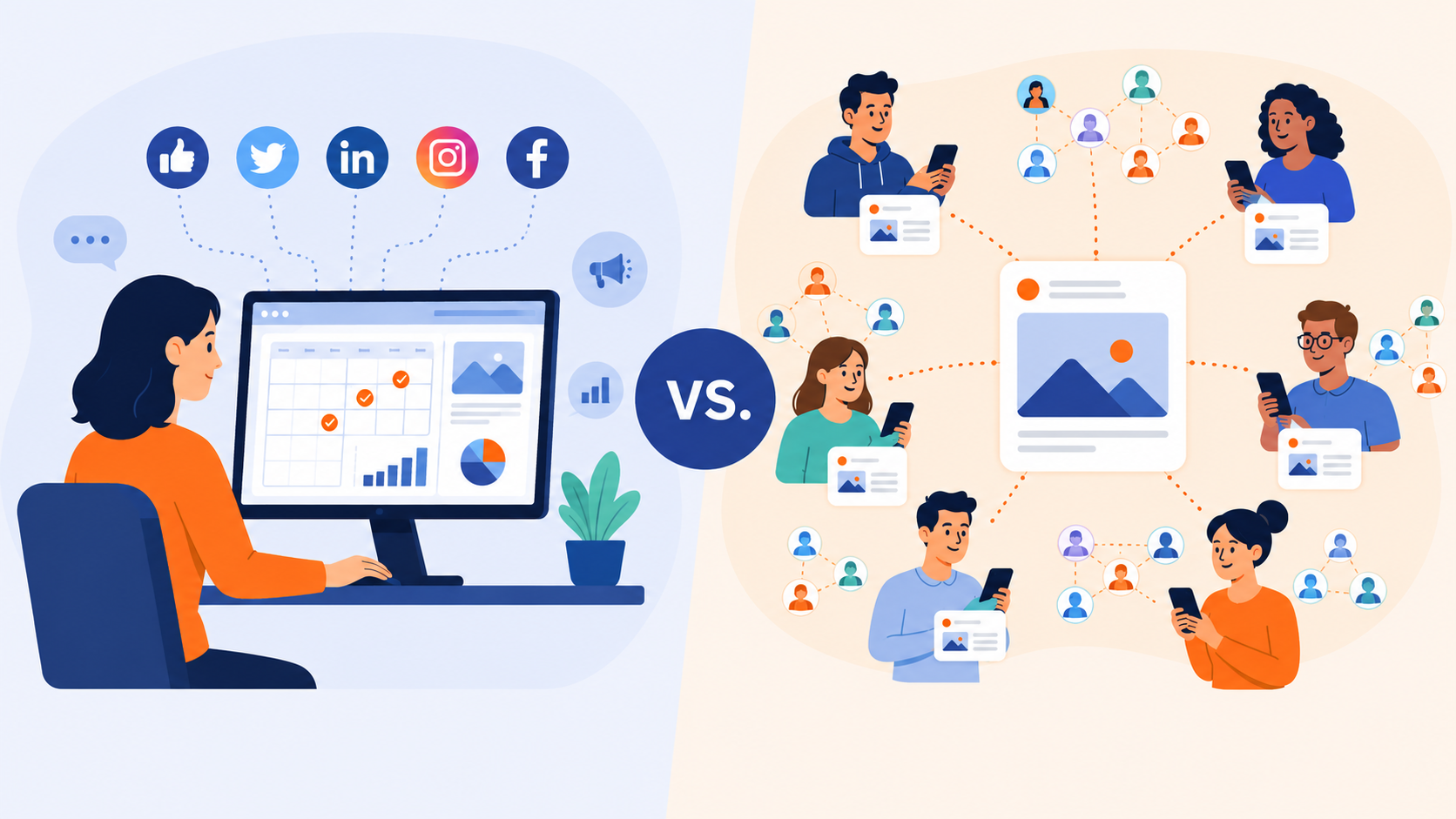
A platform-based approach replaces every manual touchpoint with a structured, measurable workflow. Instead of drafting requests in Slack, a manager curates content in a centralized dashboard and uses segmentation to send the right activities to the right people.
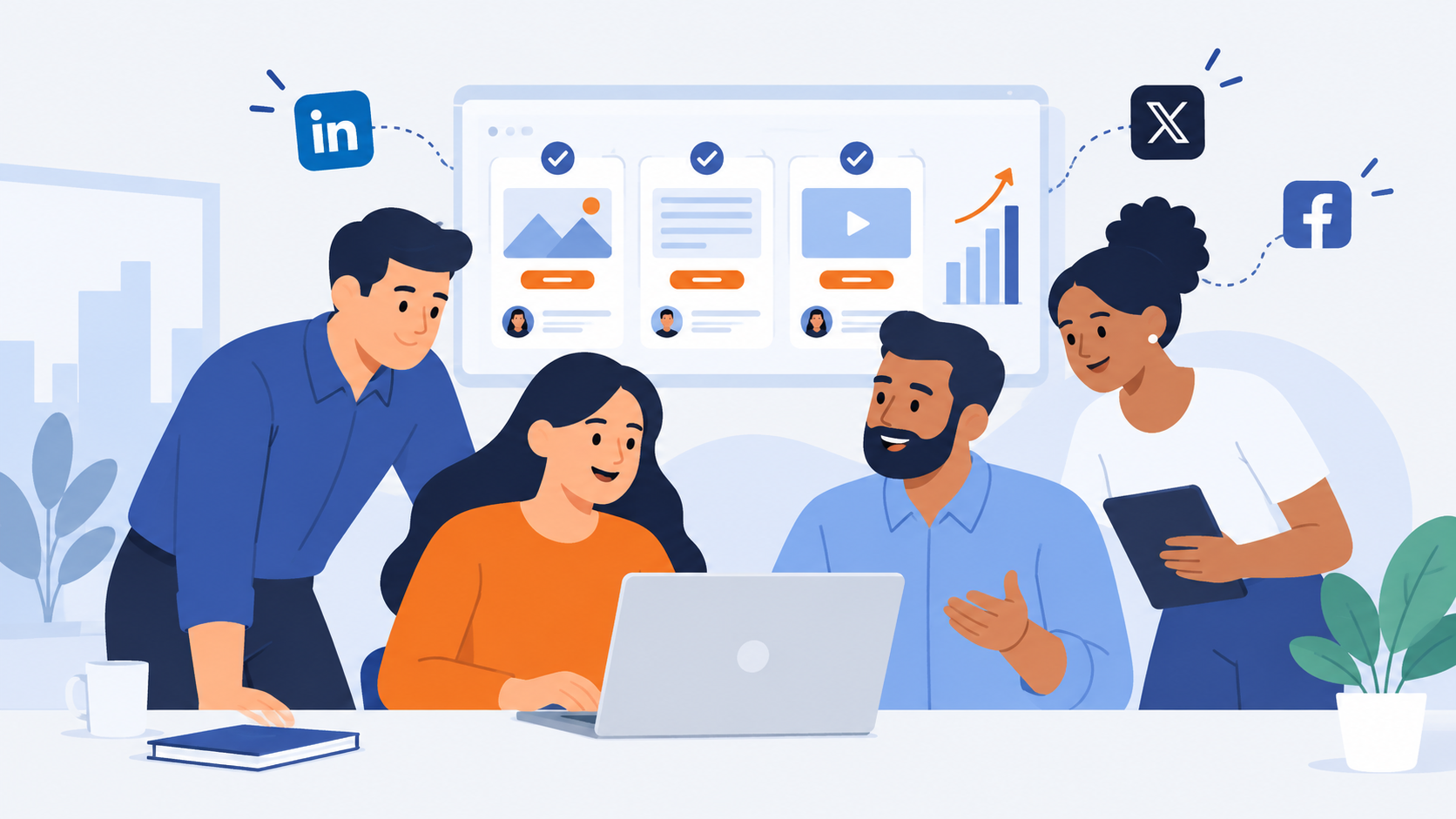
Employees receive content suggestions inside the tools they already use, like Slack or Microsoft Teams. They review a pre-approved post, optionally personalize it with one click using AI-generated copy variations, and share it to LinkedIn, X, Facebook, or any other connected channel. The entire process takes less than three minutes per week for the average participant.
On the management side, the platform tracks every share, click, and engagement event. It connects those data points to traffic, leads, and pipeline through UTM parameters and CRM integration. Reporting that used to require a manual spreadsheet now updates in real time.
How AI Removes the Blank-Page Barrier
One of the biggest reasons employees stall on sharing is the blank page. Writing a social media post from scratch feels risky. What if it sounds wrong? What if it doesn't represent the company well?
GaggleAMP solves this by generating unique copy variations for every employee through its AI Suite. A manager writes one post. The platform creates personalized versions that sound like each individual advocate, not like a templated corporate announcement. This is included in every plan, not reserved as a premium add-on.
The result is that employees share more, share faster, and share content that resonates with their own networks. When content sounds authentic, it earns more engagement, and that engagement is what drives discovery for your brand.
How Structured Workflows Replace Chasing
In a platform-based program, managers spend roughly 15 minutes per week setting up activities. Content calendars and scheduled sharing replace the cycle of draft, distribute, remind, repeat. Segmentation ensures that sales teams receive thought leadership content while HR teams receive culture and employer brand posts.
Gamification, including points and leaderboards, creates healthy participation incentives without requiring managers to send individual follow-up messages. GaggleAMP Members earn points for completing activities, and those points can be redeemed for rewards, turning advocacy from an obligation into something employees genuinely enjoy.
How to Build a Business Case for Replacing Manual Advocacy
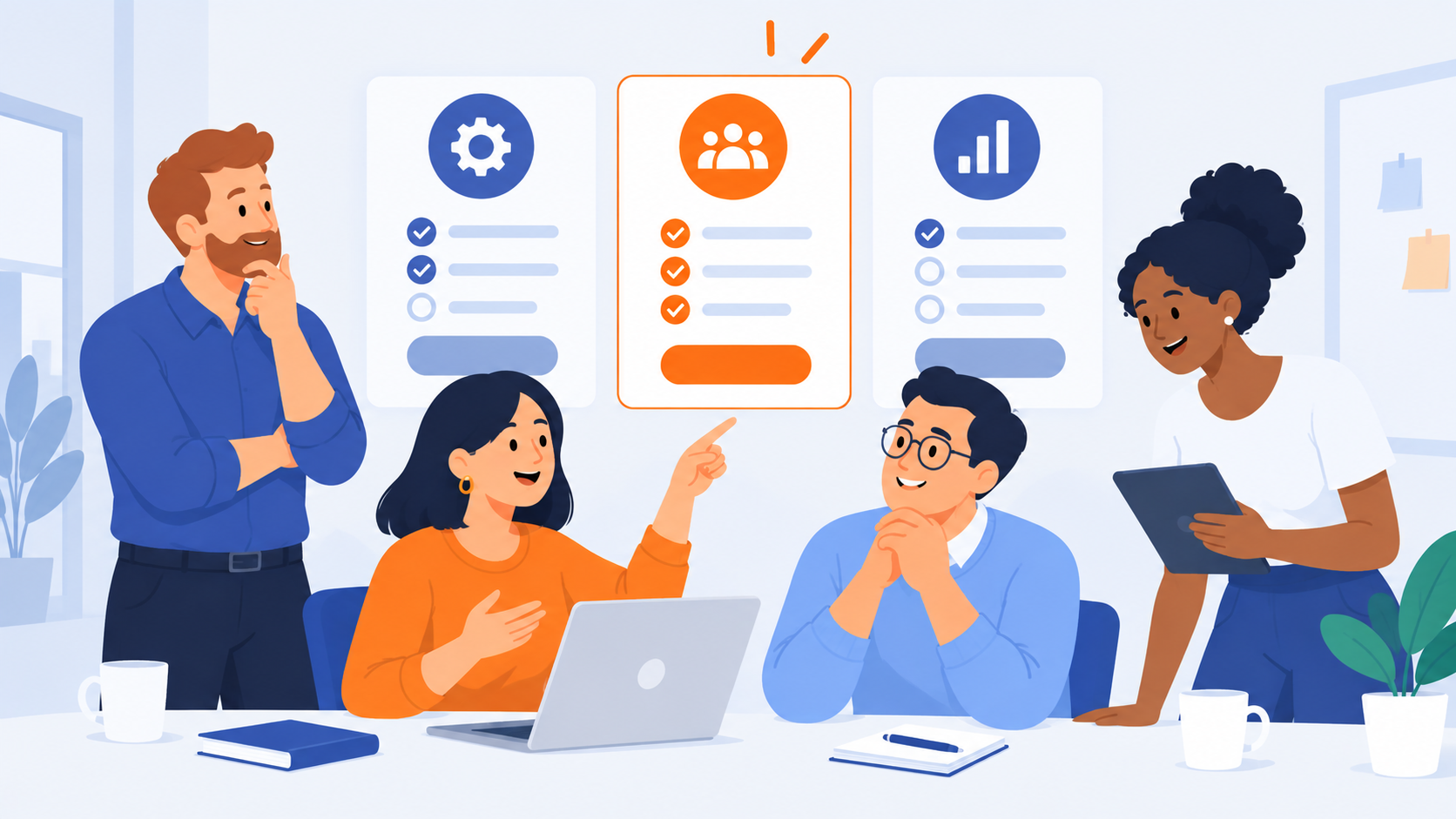
Securing buy-in from leadership starts with speaking their language. Here is how to frame the business case for each stakeholder group.
For the CMO and Marketing Leadership
Lead with pipeline metrics, not follower counts. Frame the transition as moving from unmeasurable effort to a channel that connects employee shares to revenue through attribution. Reference the fact that employee content earns three times more trust than paid brand ads, and that employees' combined networks represent a reach advantage that paid advertising cannot replicate.
Position the investment as an alternative to increasing paid social budgets. When paid campaigns exhaust their budget, an advocacy program keeps generating discovery through organic employee shares at no incremental cost per impression.
For the CHRO and HR Leadership
Frame advocacy as both an employer branding channel and an employee engagement initiative. Highlight the time savings: HR professionals who currently spend hours coordinating manual shares can redirect that time toward strategic talent acquisition work.
Emphasize the employer brand visibility angle. Passive candidates are far more likely to engage with a company where real employees are actively sharing their experiences. A structured program makes those shares consistent, authentic, and trackable.
For the CFO and Finance
Finance cares about ROI, and the strongest argument is the one backed by numbers. Use GaggleAMP's ROI calculator to model projected earned media value based on your company size and expected participation rate. 95% of GaggleAMP customers achieve full ROI within 90 days, a timeline that gives finance a clear payback window.
Also quantify the cost of doing nothing: the coordinator hours wasted, the unmeasured shares, and the pipeline opportunities that never materialized because your team lacked attribution.
How to Roll Out a Platform-Based Advocacy Program in 5 Steps
Step 1: Start With a 30-Day Pilot
Select 15 to 25 employees from across HR, marketing, and sales. Choose people who are already somewhat active on social media, because they'll adopt the new workflow fastest and generate early proof points. Define two or three measurable goals for the pilot: participation rate, total reach, and clicks generated.
Step 2: Curate Your First Content Library
Build a library of 15 to 20 pre-approved posts covering employer brand content, thought leadership, and product awareness. Use AI-generated copy variations so that each employee has a unique starting point rather than an identical post. Tag each post by team or function so that segmentation is built in from day one.
Step 3: Integrate With Your Existing Tools
Connect the platform to Slack or Microsoft Teams so that employees encounter advocacy activities where they already work. GaggleAMP's integration with Slack and Teams is the most-cited reason organizations choose it, because it eliminates the barrier of a separate login or app. Also connect your CRM and analytics tools to enable attribution from the start.
Step 4: Activate Gamification and Recognition
Turn on leaderboards and point-based rewards during the pilot. Early recognition creates momentum. When pilot participants see their peers sharing and earning rewards, participation builds organically. Share weekly results with the pilot group to keep engagement high.
Step 5: Expand With Data
After 30 days, review your pilot metrics. Successful GaggleAMP programs typically see 65 to 85% adoption rates among active participants. Use those numbers to build the case for expanding to additional departments. Each expansion wave follows the same pattern: curate content, segment by team, integrate with existing tools, and measure results.
How to Measure the Impact of Your New Advocacy Program
Measurement is where platform-based programs separate themselves from manual ones. Here are the metrics that matter, organized into three tiers.
Tier 1: Activity Metrics
Track participation rate (what percentage of invited employees share content), activities completed per week, and content completion rate. These metrics tell you whether the program is running. They are necessary but not sufficient on their own.
Tier 2: Engagement Metrics
Measure clicks, reactions, comments, and shares generated by employee posts. Compare the engagement rate on employee-shared content to the engagement rate on your company page. Employee content typically outperforms company-page content because audiences trust personal voices more than brand accounts.
Tier 3: Pipeline and Revenue Metrics
This is where advocacy earns its seat at the leadership table. Track website traffic attributed to employee shares through UTM parameters. Measure form fills, demo requests, and pipeline opportunities that originated from or were influenced by advocacy content. GaggleAMP's analytics dashboard connects these data points so that you can report on earned media value, pipeline influenced, and ROI.
When you can draw a line from an employee's LinkedIn share to a closed deal, advocacy stops being a "nice-to-have" and becomes a channel your revenue team depends on.
Common Mistakes to Avoid When Transitioning From Manual to Platform-Based Advocacy
Trying to Onboard Everyone at Once
Resist the temptation to launch company-wide on day one. A phased approach lets you refine your content strategy, identify your most engaged advocates, and build internal case studies before scaling. Start small, prove results, then grow.
Focusing Only on Marketing Content
Advocacy programs that serve only marketing goals miss the full value of employee voices. Include employer brand content for HR, thought leadership for sales, and internal culture content for engagement. The broader the content mix, the broader the participation base.
Neglecting Manager Buy-In
People managers are the bridge between the program and their teams. If a sales director or HR manager doesn't understand why advocacy matters, their team won't participate. Invest time in educating managers on the benefits for their specific function before rolling the program out to their teams.
Measuring Only Shares
Shares tell you that activity happened. They don't tell you whether that activity produced value. From day one, configure attribution so that you're tracking clicks, traffic, and pipeline alongside participation. Programs that report only on shares eventually lose executive support.
In Conclusion: Your Team Is Ready, Your Manual Process Is Not
The people inside your organization already have the networks, the credibility, and the willingness to amplify your brand. What's holding them back is a manual process that asks too much effort for too little reward, and offers no way to measure whether any of it is working.
Replacing that process with a structured, platform-based approach changes the equation entirely. Employees share in seconds rather than minutes. Managers curate and track from a single dashboard. Leadership sees real pipeline metrics instead of faith-based arguments. And the whole program runs inside the tools your team already opens every morning.
GaggleAMP was built for exactly this transition. It embeds advocacy into Slack and Microsoft Teams, generates unique AI-powered content for every advocate, and connects every share to measurable business outcomes. If you're ready to stop chasing and start growing, explore how GaggleAMP can help your team.
FAQs About Replacing Manual Employee Advocacy
What is the biggest problem with manual employee advocacy?
Manual advocacy cannot scale beyond a small group of enthusiastic participants. The coordination overhead increases with every new employee, while measurement remains limited to basic share counts. This combination makes it impossible to prove ROI or sustain executive support as your organization grows.
How long does it take to transition from manual to platform-based advocacy?
Most organizations can run a structured pilot within 30 days. GaggleAMP customers typically achieve full ROI within 90 days of launching their program, which includes the pilot phase, initial expansion, and the first round of attribution reporting.
Can small teams benefit from replacing manual advocacy workflows?
Yes. Even teams of 15 to 25 people see measurable improvements in reach and engagement when they move from manual processes to a platform. GaggleAMP includes unlimited Members in every plan, so small teams can grow their program without worrying about per-employee costs.
How does GaggleAMP help employees who are nervous about posting?
GaggleAMP removes the blank-page barrier by providing AI-generated copy variations for every activity. Employees start with a personalized draft rather than a blank text field, which reduces the time and confidence needed to share. Each post sounds like the individual advocate, not a corporate template.
What metrics should HR and marketing track after switching to a platform?
Track participation rate and activities completed for program health. Measure clicks, engagement, and earned media value for audience impact. Connect advocacy to pipeline opportunities and revenue influenced for business outcomes. GaggleAMP provides all three tiers of reporting in a single analytics dashboard.
Does employee advocacy work for talent acquisition and employer branding?
Employee advocacy is one of the most effective channels for employer branding. When your employees consistently share culture content, job openings, and workplace stories, passive candidates see an authentic picture of your organization. GaggleAMP helps HR teams segment and schedule employer brand content alongside marketing and sales activities.